The Last Song Radio
The inspiration for "The Last Song Radio" is rooted in a realistic yet poetic contradiction in human space exploration: satellite probes, as embodiments of human intelligence and courage, eventually face "the end of life" when their service lives expire or they fail.
Whether through active "evaporation" schemes proposed by the Russian Space Agency, orbital impact, re-entry into the atmosphere, or the final "goodnight" command received by NASA's Kepler probe before permanent disconnection after running out of fuel, each satellite's "death" is marked by the effort and loss that accompany human exploration of the universe.
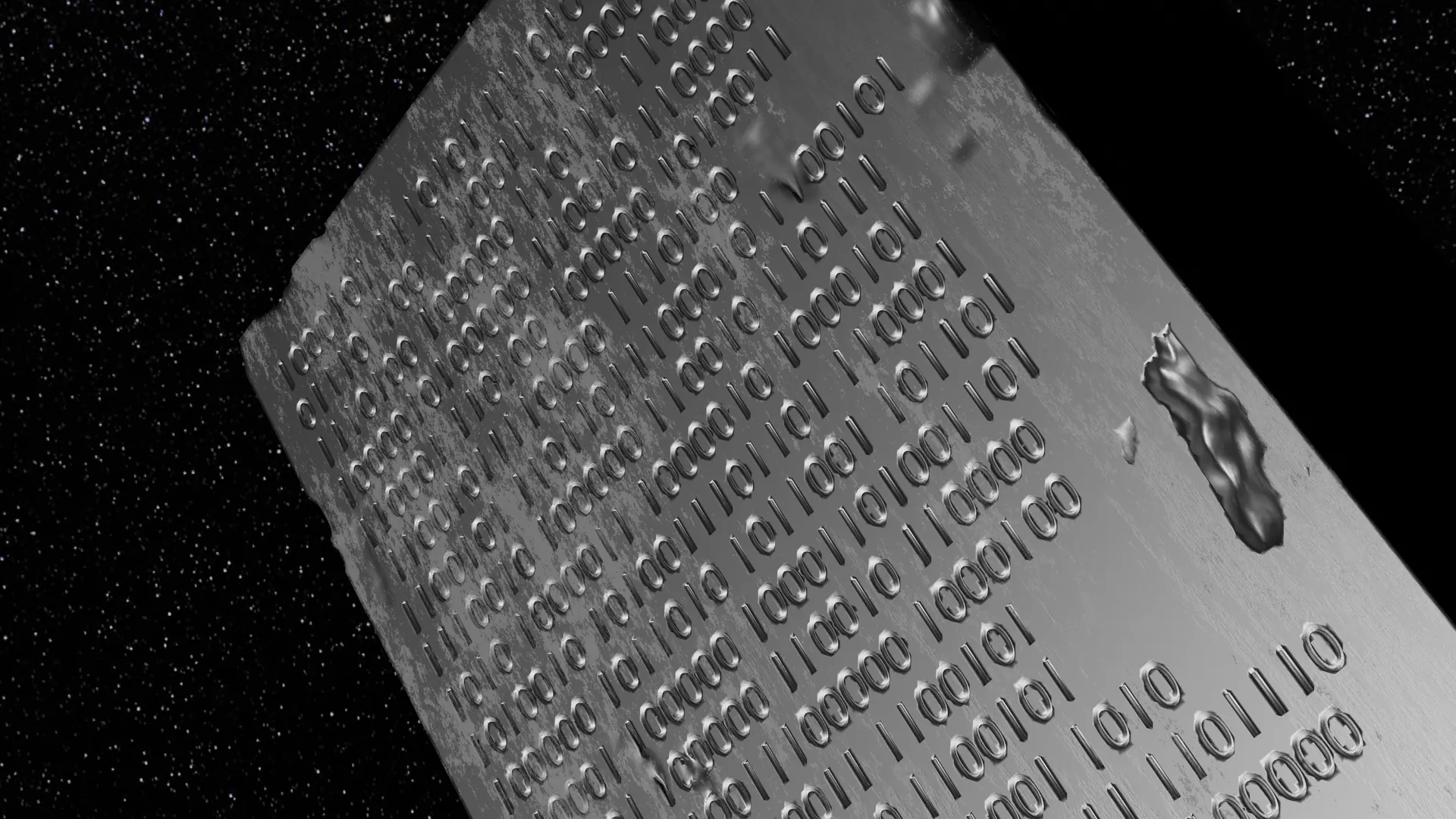
"The Last Song Radio" focuses on satellites and spacecraft that have self-destructed because of retirement or failure in the history of human space exploration. It records their names and self-destruction dates on a 3D-rendered digital monument. Through simulated noises such as explosions, combustion, short circuits, and communication shutdowns, the SCA-1 art satellite is transformed into a murmuring monument: a "radio station" wandering in Earth's orbit and playing the "farewell messages" those satellites leave to humanity. The audience of this "radio station" is not only humans on the ground, but also a possible third party in the vast universe.
绝唱电台
《绝唱电台》(The Last Song Radio)的灵感深深植根于人类航天探索中一个既现实又充满诗意的矛盾点:卫星探测器作为人类智慧与勇气的最高结晶,却终将在服役期满或因故障失效后,面临着“生命的终结”。无论是如俄罗斯航天局提出的基于升华材料的主动“蒸发”方案,如轨道坠毁、再入大气层,还是像NASA开普勒探测器那样在耗尽燃料后收到最终的“晚安”指令、被永久性地切断联系,每一次卫星的“死亡”都烙印着人类探索宇宙所付出的努力与伴随的失落。
《绝唱电台》(The Last Song Radio)聚焦于人类太空探索历史上因退役或故障而自毁的卫星和航天器,将这些航天器的名称和自毁日期刻录在一个3D渲染的数字纪念碑上,借助模拟出来的爆炸、燃烧、电路短路、通讯关闭等噪声,将SCA-1艺术卫星转化为一块喃喃自语的纪念碑,一个游荡于地球轨道上的“电台”,播放那些向人类告别的卫星所留给人类的“遗言”。“电台”的听众不仅仅是地面上的人类,也可能是在浩瀚宇宙中⸺那个可能存在的第三者。