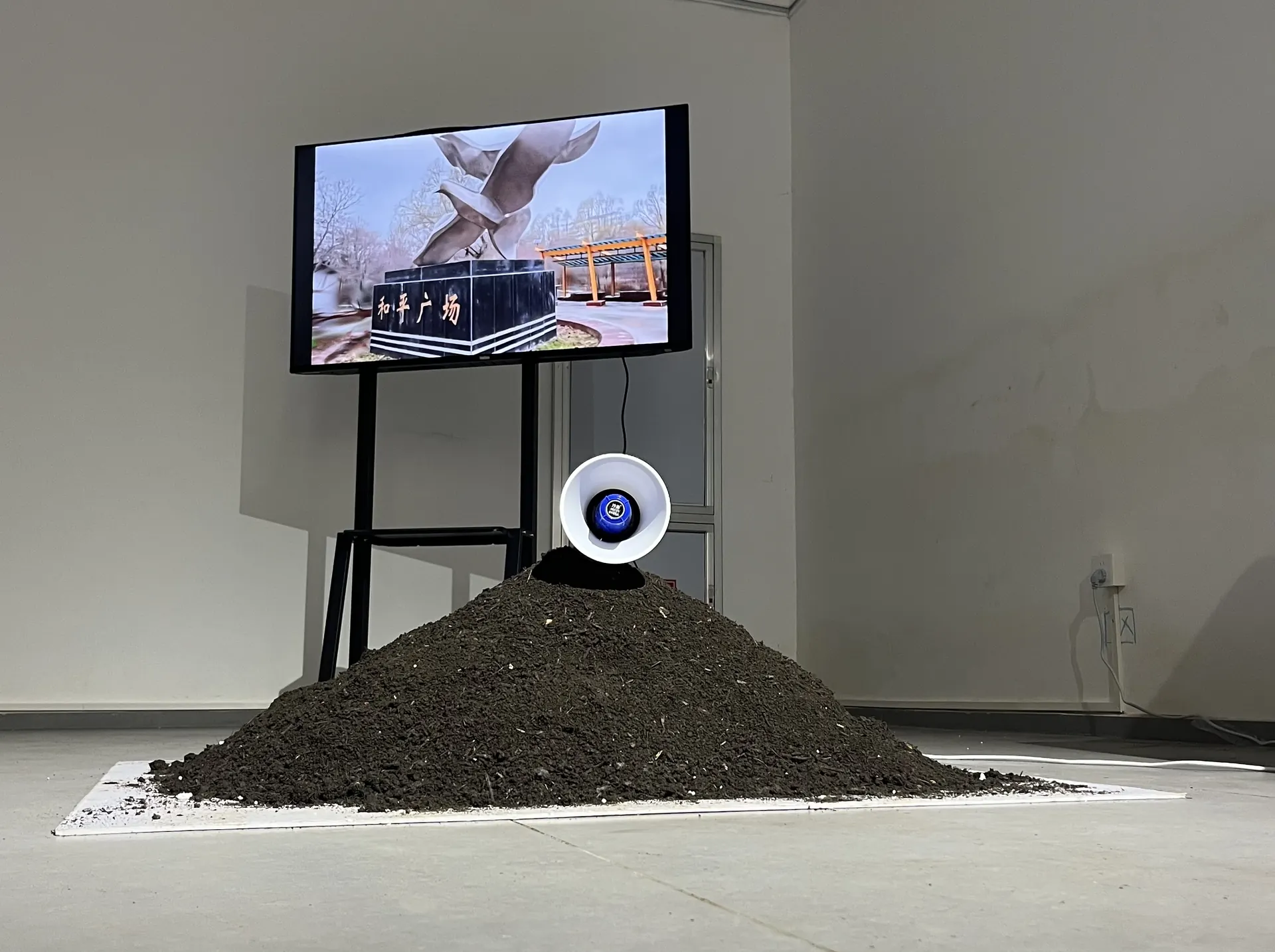
The journey of the soil
This work is based on research into the history of Third Front construction in Jingdezhen. Having grown up in a military-industrial factory district in Northeast China, I became acutely aware of the strong atmospheric and visual resemblance between the Hafei area in Harbin and the Changfei area in Jingdezhen. The sculptures in Heping Square near Hafei and Changhe Square near Changfei both retain traces of the former Soviet brutalist sculptural tradition. The Northeastern accents that occasionally echo through Changhe Square make me feel that Changfei does not fully belong to this misty and rain-soaked southern landscape.
"In the 1960s, in response to the military-industrial relocation goals of Third Front construction, aviation researchers from Harbin moved from the distant, cold, and dry Northeast to Jingdezhen, the porcelain capital, where they established Changhe Aircraft Industry, Factory 372."
"After the 1980s and the beginning of reform and opening up, some of the workers who had come from the Northeast did indeed return there. Some could not adapt to the local climate, diet, or environment, so they went back to their hometowns."
For those who have left home, whether their sense of belonging to the hometown is strong or faint, there is always a moment when they glimpse the shadow of that hometown within themselves.
In April 2024, I dug red soil from Changhe Square and sent it by express delivery to Harbin, where I placed it into the black soil of Heping Square near Hafei. I then dug black soil from Heping Square and placed it into the red soil of Changhe Square. At the same time, I recorded the sounds of the two kinds of soil jolting during express transportation, forming a sound installation.
"At that time, the factory dismantled large machines into smaller parts, and then dismantled those parts into components. In a vast procession, they moved from the plains of Northeast China all the way south into the mountains, where they settled and began building the factory."
A parcel filled with red soil needs only two days to travel from Jingdezhen to Harbin. For some people, however, this two-day journey took an entire lifetime.
土旅
作品基于对景德镇三线建设历史的考察而创作,作为一个在东北军工工厂地区长大的孩子,我敏锐地发现哈飞地区和昌飞地区两者之间气质和视觉上的高度相似,哈飞附近的和平广场和昌飞附近的昌河广场的雕塑沿袭着前苏联野性主义雕塑的余韵,昌河广场上时不时传来的东北乡音令我感觉昌飞似乎并不属于这个烟雨飘摇的南方。
“19世纪60年代,为了三线建设的军工业迁移目标,位于哈尔滨的航空科研人员从遥远、寒冷、干燥的东北迁到瓷都景德镇,建立昌河飞机工业(372厂)。”
“19世纪80年代之后,改革开放之后,一部分当时从东北过来的职工确实都回(东北)去了,有些人受不了这边的气候,也受不了这边的饮食、环境,就都回到家乡去了。”
对于离乡的人,无论对于家乡的归属感或重或轻,总会在某一刹那在自己的身上看到故乡的影子。
2024年4月,我将从昌河广场挖的红土通过快递的方式,填入哈飞旁边和平广场的黑土地中。又从和平广场挖取黑土,填入昌河广场的红土地当中。同时我录下两种土在快递运输过程中颠簸的声音,形成一组声音装置。
“那个时候,厂里是把大机器拆成小部分,把小部分拆成零件,浩浩荡荡从东北的平原一路向南,一直走到南方的山区,安营扎寨,开始建厂。”
装满红土的快递,仅花费两天时间,即可从景德镇到达哈尔滨。而对于有些人,这两天的路他们却走了一辈子。